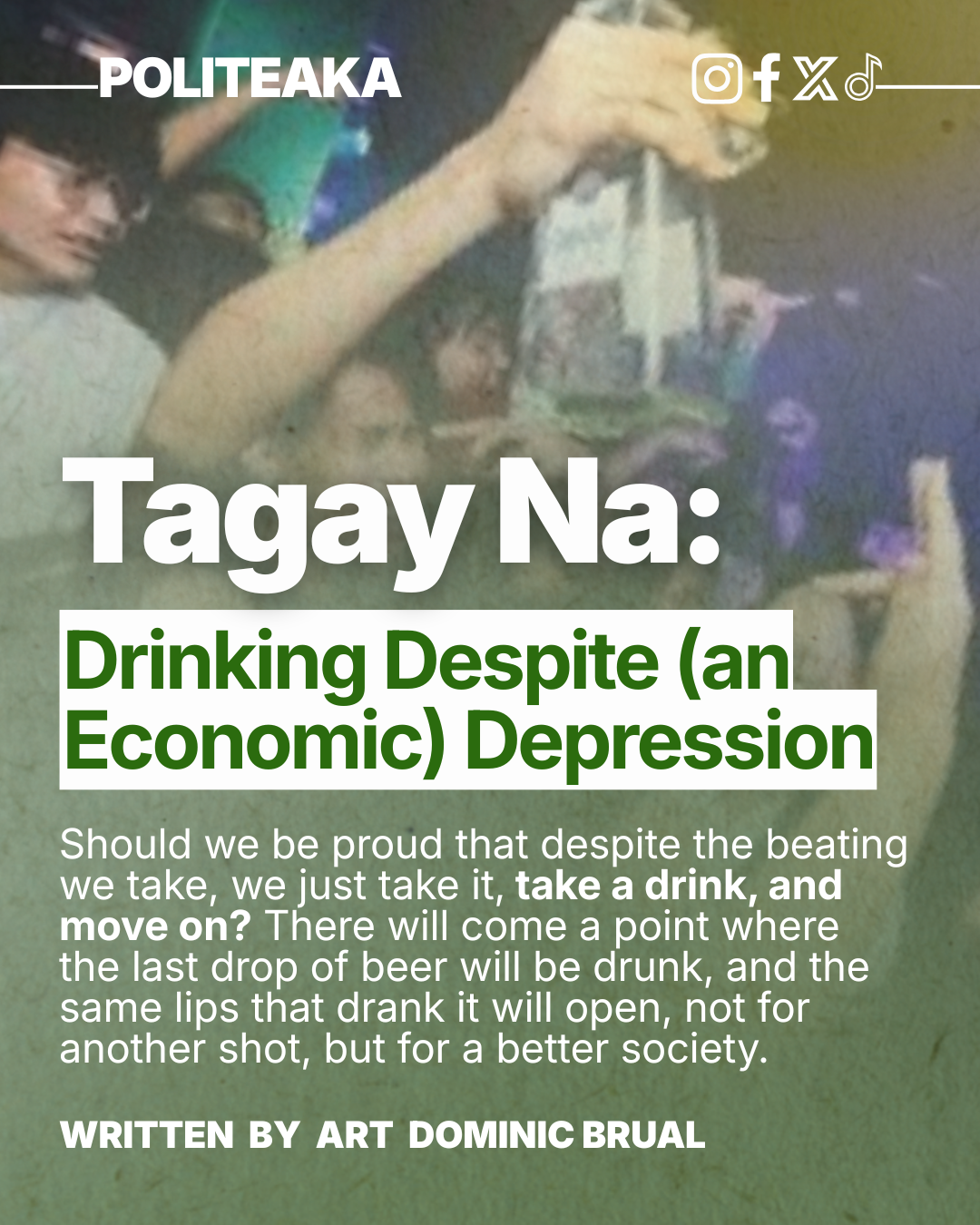
Poblacion. Tomas Morato. BGC. Katipunan. These are just some of the hotspots in Metro Manila, which represent the capital regionΓÇÖs nightlife. Expand that to the rest of Greater Manila, and you are faced with a plethora of choices. The Filipino tagay culture can be traced to its pre-colonial roots. Tagay, or the passing of a single glass of alcohol around and refilling it, is often a practice found after a social event or even at the corner of a convenience store. ItΓÇÖs not too uncommon to find such scenes across the Philippines, in both urban and rural settings. While the country is battered with back-to-back issues of corruption, inflation, and general socio-economic issues, the country and its youth have chosen to defy the global trends and have turned to the bottle, despite, or perhaps more accurately, because of economic struggles.
According to IWSR, global trends show that Gen Z has seen alcohol consumption decline in recent years. IWSR reported a 20% reduction in alcohol consumption across all ages since 2000. In 2025, Gen Z in Canada, South Africa, China, and the US have reportedly begun to engage in moderation, with some even reporting months of complete alcohol abstinence. In the Philippines, the opposite trend can be seen. 1 out of 3 Filipinos reported binge drinking (more then six alcoholic beverages in one sitting) in the last 30 days. The NHI-HPP, one of the countryΓÇÖs leading agencies on the topic, reported a doubling of alcohol consumption from 2021 to 2023 for the youth aged 10-19.
Advocacy groups have raised alarms regarding this upward trend. Movendi, an international anti-alcohol NGO, report that over 1 trillion pesos have been lost due to alcohol and tobacco harm. Almost 40,000 deaths have been attributed to alcohol alone in 2019. A proposed increase in the ΓÇÿsinΓÇÖ tax on alcohol has been proposed by advocacy groups, though it has yet to reach the Congress floor. This issue isnΓÇÖt being ignored by the government. The Department of Health has been drafting a policy to address the widespread use of alcohol. Titled the ΓÇ£National Strategic Framework on Alcohol Use Prevention and ControlΓÇ¥, the policy has already been under work at least since 2023. Despite the three years that has passed, the Department of Health has yet to officially put this draft into actual policy. Last mention of this draft policy was in 2024, as the Department of Health (DOH) asked for stakeholder input. With no official policy, it would seem DOH is choosing to ignore the growing number of those with alcohol-related non-communicable diseases (NCD). According to Movendi, alcohol-related disability-adjusted life year (DALY), a measure that combines years of life lost due to premature mortality and years of life lost due to time lived in states of less than full health, has increased by up to 10% since 1990.
Despite this danger, Filipinos seem to be unaware or at least unbothered by the danger. One look across any clubΓÇÖs social media in the common nightlife spots shows packed clubs even on weekdays. The Filipino inuman culture endures even in the harshest conditions. According to research done by Jamaal Omamalin in 2022, many Filipinos see drinking as an escape from reality and a way to socialize. Another more relevant reason is that Filipinos use inuman as a way to destress and let out frustrations. With the easy access to beers and other alcoholic beverages via the proliferation of sari-sari stores and convenience stores near colleges, universities, commerce, and business centers, itΓÇÖs not too uncommon to see these reasons play out in real time. Clubs arenΓÇÖt the inuman centers. The fronts of these stores often become secondary homes to destressing Gen Z students and office workers with beers or even bottles of gin as they destress for the day.
The government, especially the Department of Health, needs to address this far-ignored rise in youth alcoholism. It is the responsibility of the government to put in place preventative measures, not reactive ones, to address this future public health issue. NGOs such as Movendi and the World Health Organization have already laid out several recommendations to address the crisis. The implementation of the earlier-mentioned ΓÇ£National Strategic Framework on Alcohol Use Prevention and ControlΓÇ¥ contains several of these recommendations, which include, but are not limited to, limited to stricter guidelines on alcohol advertising, marketing, and sponsorship; stricter taxation and pricing policies to reduce excessive consumption; regulation of sales and distribution; and even government-provided counseling and support for affected individuals.
As the Philippines faces another pending economic crisis, I do not see the inuman culture going away. In fact, IΓÇÖd wager on an increase. Filipinos are a hearty, emotional folk. We love our social events and holidays. With crises back-to-back, the sight of stacked cases of opened beer or pitchers of gin mixed with various juices will become more common as Filipinos continue to live up to our ΓÇÿresilientΓÇÖ image. But is that something we should be proud of? Should we be proud that despite the beating we take, we just take it, take a drink, and move on? There will come a point where the last drop of beer will be drunk, and the same lips that drank it will open, not for another shot, but for a better society.